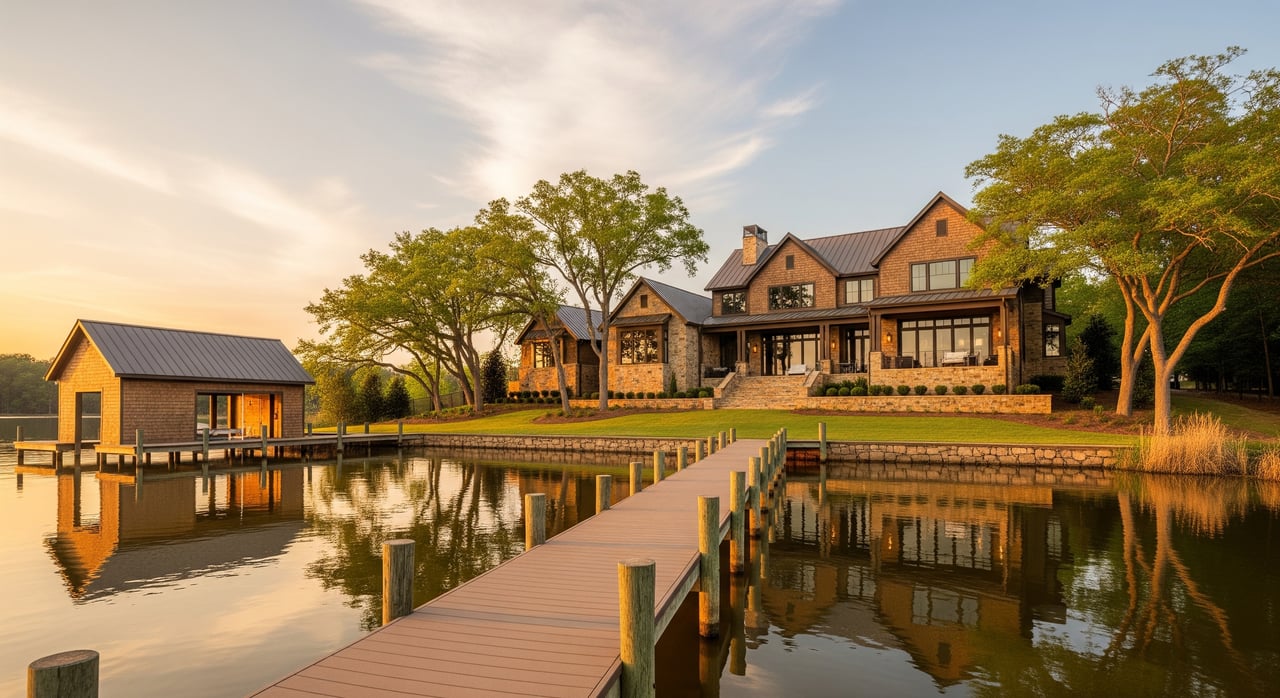
Thinking about selling in Highland Lakes and wondering how to price your home with confidence? You are not alone. Whether you live on the water, have deeded lake access, or are on an interior lot, the right strategy can put you in front of more qualified buyers and protect your bottom line. In this guide, you will learn how to build a Highland Lakes-specific pricing plan, what to adjust for lake features, and how to use market data to back up your number. Let’s dive in.
What drives value in Highland Lakes
Pricing in Highland Lakes should focus on your immediate competitive set. That means similar homes in the same neighborhood or nearby subdivisions with comparable amenities, utilities, and school zones. The closer the match on lot type, features, and timeline, the better your pricing accuracy.
Lakefront vs. lake-access vs. interior
- Lakefront with direct frontage and potential dock rights usually commands a premium over interior lots. The size of that premium depends on actual local sales.
- Lake access through a community launch or deeded access is valued between true waterfront and interior.
- Interior lots can still compete well when the home is updated, staged, and priced to the current inventory.
Lot and shoreline details that matter
- View quality, water depth near the shoreline, and orientation can affect buyer enthusiasm.
- Shoreline improvements such as docks, bulkheads, or seawalls should be safe, functional, and documented with any required permits from local authorities.
- Verify lot lines, easements, setbacks, and any floodplain overlays using county GIS or parcel records.
HOA, amenities, and rules
- HOA dues, amenity access, and any rules for docks or boat storage shape your buyer pool. Have fee schedules and covenants ready, plus any notice of pending assessments.
- Highlight neighborhood amenities that add convenience and lifestyle value.
Condition and recent updates
- Buyers value updated kitchens and baths, newer roofing, HVAC, and windows.
- If there is deferred maintenance, decide whether to repair before listing or to price accordingly.
Insurance and flood risk
- Confirm whether the property sits in a FEMA Special Flood Hazard Area and whether an elevation certificate exists.
- Some lenders require flood determinations. Be ready to disclose and provide documentation.
Build a local CMA that works
A strong pricing decision comes from a well-structured Comparative Market Analysis. Keep it focused and local.
Define the product
Start by categorizing your property precisely: lakefront with private dock rights, lake-access only, or interior single-family. Then note square footage, bed-bath count, lot size, age, parking, finished basement or bonus rooms, outdoor spaces, and any unique features.
Select comps and timeframe
Use a 3 to 6 month lookback in a faster market or 6 to 12 months in a slower one. Prioritize sold lakefront comps if you are lakefront, and interior comps if you are interior. Add pending and active listings to understand current competition and buyer expectations.
Adjust for differences
Adjust for size, lot type and frontage, condition, updates, garage capacity, outdoor living, and shoreline improvements. Use a consistent approach and document your rationale. For lake features, lean on local sales and, when needed, appraiser guidance to benchmark premiums.
Translate to a pricing range
After ranking comps by similarity and making adjustments, produce a clear low-likely-high range. Then set a recommended list price tied to the strongest comps and the current inventory.
Track the right market metrics
These numbers help you stay aligned with demand and avoid overpricing:
- Price per square foot for similar property types. Treat it as a baseline, not a rule.
- Days on Market (DOM) and DOM trend for comparable homes.
- List-to-sale price ratio to see how much negotiation is typical.
- Months of supply or absorption rate to gauge buyer vs. seller market conditions.
- Number of active lakefront listings vs. recent sales to measure scarcity and potential premiums.
Choose the right pricing posture
Pick a strategy that matches your goals and the current inventory in Highland Lakes.
- Competitive list-to-market: Price in line with market value to draw strong early interest. Useful when inventory is tight.
- Aggressive market-penetration: List slightly under similar active comps to maximize showings and stimulate bidding.
- Aspirational: Price above comp-supported value expecting to negotiate down. This risks longer DOM and appraisal gaps.
- Price-firm vs. flexible: Decide your stance before launch and align with your bottom line and timing.
Use presentation to support price
Buyers respond to a home that looks move-in ready and well cared for. Presentation and pricing work together.
- Professional photography, twilight shots, and drone imagery show off the setting, especially for lakefront.
- Strategic staging and light pre-list updates make your price feel justified.
- A measured floor plan helps buyers compare efficiently and avoid size confusion.
Pre-listing checklist for stronger pricing
- Order a detailed CMA with an explicit pricing rationale.
- Gather HOA documents, fee schedules, and any pending assessments.
- Pull recent utility bills, permits for shoreline work, and a current survey if available.
- Consider a pre-list inspection focused on roof, HVAC, and visible structure, plus targeted repairs.
- If you are leaning toward an above-market opening, consider a pre-list appraisal.
- Clarify your net proceeds target and timing needs to guide negotiations.
Launch timing and marketing for lake buyers
Seasonality matters for lake communities. Spring and summer often bring more showings as buyers plan for warm-weather use. Coordinate your prep so you can launch into that window with strong photos, accurate waterfront details, and a clear story about access, storage, and lifestyle features. Syndicate through the MLS and ensure the description clarifies lakefront vs. lake-access vs. interior.
Evaluate offers and navigate appraisals
When offers arrive, compare more than price alone. Look at financing type, appraisal and inspection contingencies, closing timeline, and proof of funds. In multiple-offer scenarios, weigh escalation clauses, deposit size, and appraisal terms. If you priced above comp-supported values, discuss how to handle a potential appraisal gap.
When and how to adjust price
Review activity and feedback weekly. Watch your showings-to-offer ratio, how quickly similar homes are going under contract, and whether new competing listings have entered the market. If showings are low and competing homes are moving, a timely, well messaged reduction can re-energize interest. Avoid repeated small reductions that look reactive.
Quick examples: how pricing comes together
These illustrative scenarios show how adjustments can guide a final list price. Your actual numbers should come from a local CMA.
Example 1: Lakefront with private dock
- Product: Renovated 4 bed, 3 bath, updated roof and HVAC, quality dock and seawall.
- Comps: Three recent lakefront sales with similar frontage and size. Adjust up for newer roof and dock condition, adjust down for slightly smaller lot.
- Strategy: Competitive list-to-market at the top of the comp-supported range to invite strong early interest.
Example 2: Lake-access home near community launch
- Product: 3 bed, 2.5 bath, modest kitchen updates, no private dock, short walk to launch.
- Comps: Mix of lake-access and interior homes with similar square footage. Adjust up for access proximity, down for dated baths.
- Strategy: Market-penetration price just under a common search bracket to expand exposure and trigger weekend traffic.
Example 3: Interior lot with major updates
- Product: 5 bed, 4 bath, new kitchen and windows, large screened porch.
- Comps: Interior sales within the last 6 months. Adjust up for updates and outdoor living, down for lack of water access.
- Strategy: Competitive price aligned with renovated interior comps, supported by standout photography and a floor plan.
Next steps
If you want a pricing plan tailored to your Highland Lakes home, your next move is simple: assemble a local CMA, gather documents that affect value, and align on your launch strategy. When your price reflects real comps and your presentation feels market-ready, you give buyers confidence and protect your negotiation power.
If you would like a concierge-level CMA, pre-list plan, and pricing strategy built around your goals, reach out to Amanda Wasenius. We will bring luxury-standard presentation, local data, and a clear, step-by-step plan.
FAQs
How should Highland Lakes sellers pick the right comps?
- Focus on recent sales from the same neighborhood or nearby with similar lot type, square footage, condition, and amenities, then add pending and active listings to gauge competition.
How much more is lakefront worth in Highland Lakes?
- There is no fixed percentage; measure the premium using recent lakefront vs. interior sales, adjusted for frontage, view quality, dock rights, and lot size.
Do flood zones affect pricing and lending in Highland Lakes?
- Yes, if a property is in a FEMA Special Flood Hazard Area, some lenders may require flood insurance, which affects carrying costs and can impact buyer demand.
Should I repair a dock or seawall before listing?
- Minor, cost-effective repairs can improve marketability and help justify your list price; for major structural work, weigh repair cost against a pricing adjustment and disclose known issues.
What pricing approach attracts multiple offers in spring?
- Use a competitive or slight under-market price aligned with strong presentation and pre-scheduled showings to create urgency during peak seasonal demand.
What are my options if the appraisal comes in low?
- You can renegotiate, bring cash to cover part of the gap, provide additional comps to the appraiser, or adjust price; conservative, comp-based pricing lowers this risk.
