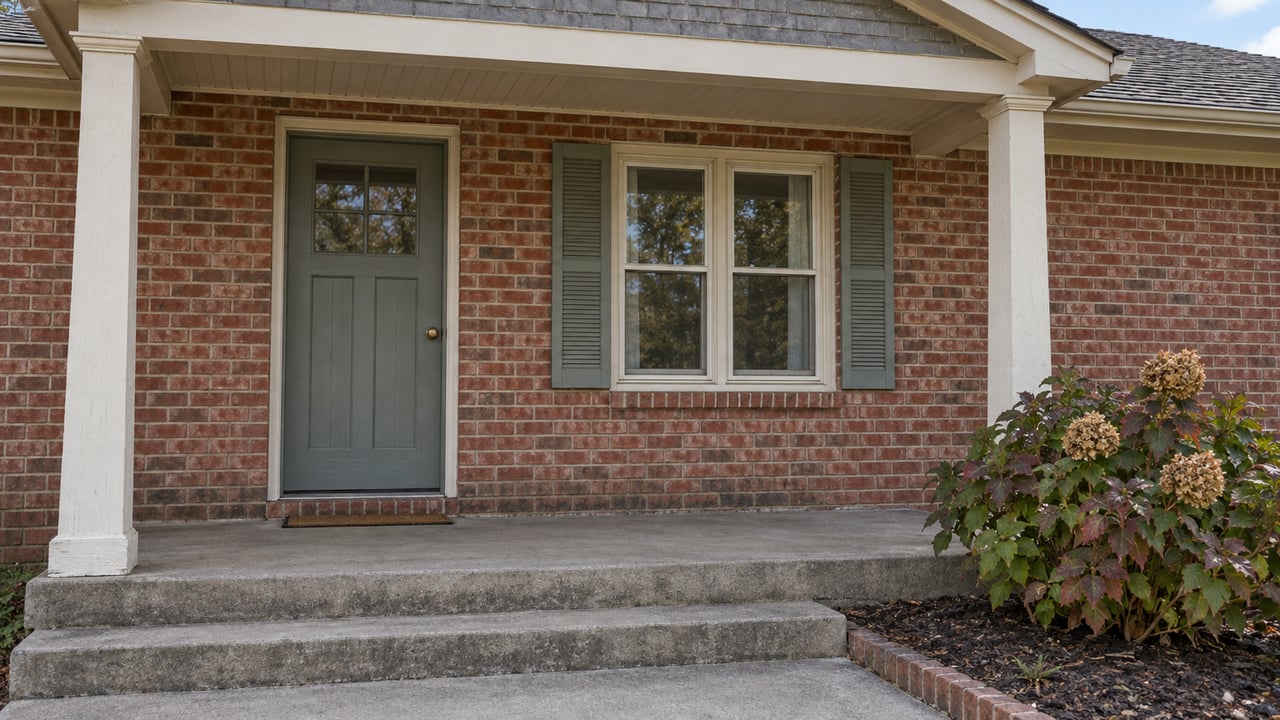
The owner of 1002 Pratt Avenue wanted to replace every window in the house. She picked Andersen 400 Series Woodwright double-hung, aluminum-clad wood windows that matched the existing size, location and configuration. The request went before the Huntsville Historic Preservation Commission in April 2025, was continued, came back in May and was continued again. At the June 9 meeting, after a more detailed window assessment that documented wood rot, windows that would not operate and broken glass, the Commission approved every window except three. The motion required those three front-elevation windows to be rebuilt using parts salvaged from the windows that came out.
That single window project needed three monthly hearings. If you are buying an older home in Five Points and already have a renovation plan, the Commission's calendar may set your timeline more than your contractor's schedule does. In Alabama, the job of finding that out before closing falls to you.
The Name on the Street Sign Isn't the Boundary
Huntsville lists Five Points as one of its four locally designated historic districts. Properties inside those districts need Commission review of exterior changes before a Certificate of Appropriateness, called a COA, or a building permit is issued. The district was established October 28, 1999. The City's own historic marker says plainly that it "does not encompass all of the area known as Five Points."
The Five Points Historic District neighborhood association describes the original local district as running from Ward Avenue to Wells and Eustis Avenues, and from Russell Street to Minor Street. Five blocks were added to the east the following year, which made Grayson Street the eastern edge.
The area also has a second designation. The neighborhood was listed on the National Register on August 20, 2012. According to the City, National Register listing alone does not restrict what private owners can alter or demolish. The local designation is the one that sends exterior work to the Commission. A home can be described as "in historic Five Points" and still sit outside the regulated boundary, and the reverse can be true too. The City's Historic Home Locator has a Historic Districts map layer for checking a parcel. When the map leaves any doubt, the preservation office can confirm it.
A Monthly Clock Sets the Renovation Timeline
Once you know a home is inside the district, the next question is how long exterior work will wait. The City's posted rules are specific.
- COA applications are due by end of business on the last Monday of each month.
- The Commission meets on the second Monday of each month at 4:30 p.m. in City Council Chambers.
- Someone representing the project must attend, or the request is denied.
- Applications missing required documentation are denied, and revisions made after the deadline may be continued to the following month's hearing.
- Approvals are valid for 12 months. Staff may grant one renewal of up to six more months if work has not started.
Here is how that plays out from today. October 5, 2026, is a Monday. The September deadline that fed the October 12 hearing has already passed, so the next deadline is October 26. An application filed this week would be heard November 9 at the earliest. That is about five weeks before a first hearing, assuming nothing is continued. At 1002 Pratt, the continuances alone added two months.
Not every project goes to a hearing. The City sorts work into three tracks, and knowing which track your plans fall into is the most useful thing you can learn before writing an offer.
| Track | Examples from the City's posted rules |
|---|---|
| No COA required | Interior work that doesn't change the exterior, repainting in prior colors, replacing window glass only, reroofing with identical materials and color, planting-only landscaping |
| Expedited Staff Review, which can be submitted any time | Routine exterior repairs, paint or roof color changes, removing synthetic siding, rear and side window changes, mechanical unit placement, hardscape, accessibility features, rear decks, gutters, demolishing non-contributing detached outbuildings |
| Full Commission review | Other changes to exterior materials or appearance, additions, new structures including fences, drives, patios and pools, demolition, painting originally unpainted surfaces |
The City sets no guaranteed turnaround for expedited reviews. Its preservation planner has explained that timing depends on staff availability and on how complete the application is. The adopted regulations also list a shorter term for staff approvals than the 12 months on the How to Apply page, so confirm the term with staff when you get an expedited approval. Any application costs $15. The fee is minor next to the waiting time.
What the Commission Has Ruled On Lately
The table shows the rules. Recent Commission minutes show how those rules apply to real Five Points houses, and a few patterns repeat.
- Front elevations get the closest scrutiny. At 1002 Pratt, staff pointed to guidelines saying modern metal or vinyl-clad windows are not appropriate on principal elevations. That guidance shaped the final split decision.
- Starting without approval is costly. At 1222 Ward Avenue, construction began without a COA and the Inspections department issued a stop-work order in June 2025. On July 14, the Commission granted only conceptual approval for the enlarged rear deck and said substantive changes could require another approval.
- Documented history carries the most weight. On March 9, 2026, the Commission treated 1104 Ward Avenue as a contributing house and turned down ornamentation it considered conjectural in a proposed front rebuild. It approved simpler work, including wood siding, plain columns and a picket balustrade, and asked staff to coordinate the final door and lighting details.
- Demolition depends on evidence. On August 10, 2026, the Commission approved removing a contributing c.1950 rear cottage at 507 Holmes Avenue after hearing evidence of severe deterioration and structural and health problems. The decision covered the outbuilding only, not the main house.
More cases are coming up. The October 12, 2026, agenda includes a proposed addition and garage at 803 Pratt Avenue, a rear screened-porch addition and fence at 809 Ward Avenue, and a side-entrance stoop and awning at 1210 Beirne Avenue. These are pending requests, not decisions.
The rulebook itself is older than many of the projects it reviews. The City's guidelines page still links a design-review guide with a 2005 copyright, along with regulations dated 2021. In June 2025, the Commission noted that the guidelines were 20 years old and discussed updating the ordinance first and then the guidelines. I found no record that revised guidelines have been adopted, so plans should follow the current guide.
Alabama Puts the Homework on the Buyer
What I'm sharing here is general information, not legal advice. Your attorney is the right person for questions about a specific property.
For resales, Alabama follows caveat emptor, or "buyer beware." The Alabama Real Estate Commission tells consumers that sellers and their agents generally don't have to disclose property defects, and that buyers should do their own due diligence. The Alabama Supreme Court has recognized exceptions for a fiduciary relationship, for a buyer's specific question about a material condition, and for known material health or safety defects that the buyer doesn't know about and can't readily see. The health and safety exception is narrow and doesn't require a seller to inspect the home looking for problems.
An "as is" clause can limit a buyer's claims even after a direct question. A 2007 Alabama Court of Civil Appeals decision applied that principle to a dispute over a property's zoning status. The case did not involve a historic district or a missing COA. Still, it shows why asking questions in writing and reading the contract carefully matter here.
The Alabama REALTORS® 2026 forms include a Seller's Property Condition Disclosure, and the association's preview describes it as voluntary. Because the form is optional, a seller may or may not complete it, so the questions about a home's history are yours to ask.
Before You Write the Offer
Some of the most useful records are hard to get. Huntsville's online inspection system requires a taxpayer ID and passcode to view results, so you can't simply search an address. The City's unsafe-buildings list is for law enforcement and official use only. To see permit, COA or stop-work records for a parcel, you go through the City's public records request process. Requests have to identify the records you want and may carry a $25 minimum processing fee. Records requests take time, so start early in your option period. Before writing an offer, I'd work through this list:
- Confirm the parcel's status on the Historic Home Locator and with City Preservation Planner Katie Stamps.
- Sort your planned exterior work into the three tracks above and count the hearings it might need.
- Ask the seller in writing about exterior work, permits and any COAs.
- File a records request for permit and COA history if the home shows recent exterior changes.
- Read the as-is language with your attorney.
A Few Questions Buyers Usually Ask
Can I replace windows in Five Points without a hearing? Replacing only the glass needs no COA. Changes to rear and side windows can go through Expedited Staff Review. Windows on the front of the house have drawn the closest review.
Is there a list of approved windows? At the June 2025 meeting, staff explained that the list people refer to shows windows the Commission has approved in the past. It is not a list of required products.
Do I need approval for a fence? Yes. New fences, walls, drives, patios and pools are listed among the items that require a COA.
If a Five Points home has caught your eye and you'd like to know how its location and your renovation plans fit the Commission calendar before you commit, Amanda Wasenius can help you check the parcel, map out the hearing dates and plan your offer. If you're a Five Points owner thinking about selling, start with Get Your Instant Home Valuation and we'll talk through how your home's exterior history will look to a buyer.
